Watercolor Dentist Clipart: Dental Design Assets
Infusing Warmth and Personality into Professional Visuals
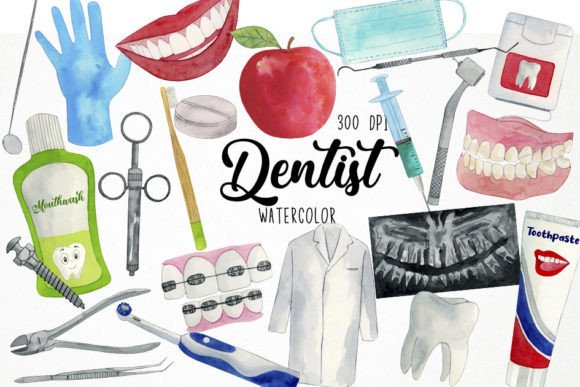
In the world of healthcare marketing, breaking through the clinical sterility is often the hardest challenge. We are used to seeing stark whites, clinical blues, and rigid geometric shapes in dental branding. However, there is a growing shift toward approachability and warmth, specifically in pediatric dentistry and holistic wellness practices. This is where specific design assets come into play. The Watercolor Dentist Clipart set offers a distinct departure from standard stock imagery. It comprises 23 hand-painted elements that bring an organic, human touch to digital communication.
Unlike vector graphics that can sometimes feel flat or overly corporate, watercolor art carries a texture that resonates with authenticity. The "bleed" of the paint and the variation in opacity mimic real-world artistic techniques. When applied to a dental context, this style transforms intimidating tools—like drills, mirrors, and teeth models—into friendly, approachable illustrations. This visual language is crucial for brands aiming to build trust before a client even walks through the door. It signals that a practice cares about aesthetics and patient comfort, moving away from the sterile "medical factory" vibe.
Strategic Applications for Marketers and Designers
For the creative professional or small business owner, the utility of these graphics extends far beyond simple decoration. The 23 PNG images included in this set are high-resolution (300 DPI) with transparent backgrounds, making them versatile design assets for both print and digital ecosystems. Because they are pre-cut, they save significant production time, allowing for rapid prototyping and deployment.
Digital Presence and Web Design
Integrating these elements into web design requires a delicate balance. You do not want to overwhelm a clean user interface with heavy textures. Instead, use the watercolor elements as accent pieces. For instance, a watercolor tooth icon can serve as a unique bullet point for a list of services, or a soft watercolor splash can act as a background for a call-to-action button. On social media, these graphics are invaluable. In a feed dominated by flat vector illustrations and stock photography, a hand-painted aesthetic stops the scroll. They are perfect for creating cohesive social media graphics for Instagram stories or Pinterest pins that promote dental hygiene tips or special offers.
Print and Editorial Design
The 300 DPI resolution ensures that these graphics hold up beautifully in print. For editorial design, such as patient newsletters or wellness magazines, these clipart elements can break up long blocks of text, guiding the reader’s eye and adding visual interest to the margins. Furthermore, they are excellent for packaging design for dental hygiene products. If you are branding a natural toothpaste or a custom floss line, watercolor art suggests organic ingredients and artisanal quality. It is also a staple for event materials—think flyers for dental camps, graduation cards for dental students, or invitations for a clinic’s open house.
Building a Cohesive Brand Identity
When developing a brand identity, consistency is king. Using a specific style of illustration, like this watercolor set, helps unify disparate marketing channels. The goal is to create a visual signature that your audience recognizes instantly. However, the challenge lies in integration. These graphics should not fight with your typography.
Font Pairing and Visual Hierarchy
Because watercolor art is inherently organic and somewhat irregular, it pairs best with typefaces that offer stability. A clean sans serif font is often the safest bet for body copy, providing a modern, legible contrast to the artistic flourishes of the illustrations. For headlines, you might consider a serif font with a bit of character, or even a script font that mimics the fluidity of the paint, provided it remains legible. Avoid using overly decorative or handwritten fonts for large blocks of text when using these graphics, as the visual "noise" can become overwhelming. Instead, let the clipart be the primary decorative element and keep your typography grounded in modern typography principles.
Practical Considerations for Implementation
While the aesthetic appeal is high, practical application requires attention to detail. As a designer or content creator, you must evaluate the file formats and usage rights. This set provides PNGs with transparent backgrounds, which is the industry standard for overlaying images. However, remember that because they are raster images, they cannot be scaled up infinitely without losing quality. They are optimized for the resolution specified (300 DPI), so planning your layout dimensions beforehand is essential.
From a branding perspective, consider how these assets influence audience engagement. In logo design, while you can use these elements for inspiration or secondary marks, a complex watercolor image can sometimes lose detail when scaled down to a favicon or a small print stamp. It is often better to use these graphics as supporting elements around the logo rather than the logo itself. This maintains professionalism while retaining the brand's personality.
Ultimately, utilizing a set like the Watercolor Dentist Clipart is about differentiating your client or your business. It is a strategic choice to prioritize warmth and approachability. By carefully integrating these hand-painted assets into your packaging design, web design, and print materials, you create a memorable experience that stands out in a sea of generic healthcare imagery. It is an investment in visual storytelling that pays dividends in client trust and brand recognition.